Major Advising Page: Nutrition and Dietetics
The Bachelor of Science in Nutrition and Dietetics with a major in Nutritional Science prepares students to become registered dietitian nutritionists (RDN). RDNs are food and nutrition experts, and work in hospitals, outpatient clinics, schools, colleges, wellness programs and nursing homes as well as in public health agencies, the food industry, and research labs.
To effectively deliver relevant food and nutrition care and programming, future RDNs must seek to develop foundational knowledge and skills to meet the needs of an increasingly diverse society. Gaining awareness, knowledge, and sensitivity to the strong connection between food, nutrition, and culture is a lifelong process. Studying abroad can provide an excellent foundation to begin broadening students’ worldview surrounding food beliefs, customs, and values, cultivating awareness and an inclusive attitude toward how food and nutrition is used and perceived across cultures.
Course considerations
Nutrition and dietetics students face challenges in finding coursework that counts as direct equivalents for our curriculum because of its inclusion of general chemistry, organic chemistry, introductory biology, anatomy and physiology, core nutrition classes, and a capstone requirement.
Other options for courses that could be fulfilled by courses abroad are breadth courses, including social sciences, humanities, and the CALS International Comparisons requirement.
Map your experience as a
nutrition and dietetics student
As a nutrition and dietetics student, it is imperative that you work with your academic advisor to determine the best time to study abroad. While nutrition and dietetics students have studied abroad in fall, spring, winter break, and summer with a four-year graduation, it requires careful planning.
To discuss how studying abroad fits within your career or professional goals in relation to the completion of the plant pathology major, please visit the CALS Career Services webpage to schedule an appointment with a CALS Career Advisor.
To gain background information about study abroad and the various programs available, attend the Study Abroad Fair on campus, visit the program search database on the UW Study Abroad website, and/or meet with CALS Study Abroad Advisors.
Special note for nutrition and dietetics students:
Some courses within the four-year plan are taught at the same time during the week and therefore need to be taken in alternate semesters. These courses include: Nutr Sci 510, and Anat&Phys 335. Please plan accordingly and check with your nutritional sciences advisor to make sure to avoid any scheduling conflicts.
Possible 4-year plan with a semester abroad
| Year | Fall | Spring | Summer |
|---|---|---|---|
| 1st Year | Chem 103 Math (if needed) FY Seminar Comm A | Chem 104 BIO 101 BIO 102 PSYCH 202 | No courses |
| 2nd Year | Chem 341 International Comparisons1 Microbio 1011 MicroBio 1021 | NS 3321 Anat & Phys 3352 Ethnic Studies1 STAT 301 or 3711 | Apply for ADI Status by 6/5 |
| 3rd Year | FS 301 NS 2001 Gen Bus 3601 or 3101 Biochem 5011 | STUDY ABROAD: General Education1/Social Science1/Humanities1 | NS 4311 |
| 4th Year | NS 631 NS 641 NS 5102 FS 437 | NS 632 NS 642 NS 500 NS 540 Gen Bus 3601 or 3101 | No courses |
1May be taken in different semesters. Please consult your academic advisor for planning options.
2Course will conflict if taken in the same semester as the following: Anat&Phys 335 and NS 510.
Freshman year
Students would be well served to start their first semester with general chemistry, or if they have chemistry completed, introductory biology. Winter break, spring break, and summer break provide opportunities for students to study abroad, especially if they are part of a FIG (First-Year Interest Group).
Sophomore year
If your foundational coursework, especially chemistry, is completed in your first year, studying abroad for a semester during the sophomore year is a strong possibility. If you are interested in studying abroad for a semester during sophomore year, the spring semester is recommended because most students take Chem 341 in the fall semester of sophomore year, a fall-only course.
Junior year
Nutrition and dietetics students typically aim to complete semester abroad experiences in their junior year; however, there are important items to consider. If you are not considering matching to a dietetic internship, but have pre-health plans, the summer of junior year is often the period when students take required admission tests for graduate programs (MCAT, PCAT, DAT, etc.). Please plan carefully with your advisor and the Center for Pre-Health Advising to ensure your study abroad will complement and not conflict with your professional pathway. Students who choose to complete semester study abroad experiences during their junior year have the option of doing so during the fall or spring semester. You will need to take Physiology 335 during your semester here at UW–Madison (or an approved transfer course) in order to be eligible for Nutr Sci 431 (Pre-Reqs: C or greater in Anat&Phys 335 and NS 332). Nutr Sci 431 is a spring/summer only course and a prerequisite for Nutr Sci 631 and Nutr Sci 641, which is taken in the fall semester of your senior year. Depending on the study abroad program, you may be able to take Biochemistry 501 while abroad for a semester.
Winter break or spring break programs are also great options and will likely not affect course sequencing or your professional timeline.
Senior year
Nutrition and dietetics students do not typically study abroad in their senior year because this is when the year-long Clinical Nutrition sequence begins; students will also complete their Food Science coursework in the fall of their senior year with the fall-only courses, Food Sci 437.
Ask questions
- What classes must I complete for my degree (breadth/depth, major requirements, etc.)?
- Do I need to be on UW–Madison’s campus for any courses in my major?
- How many electives do I have outside of my major?
- What kinds of courses abroad could count for Nutrition electives?
- What classes cause scheduling conflicts when planning?
- How do my goals (summer research experiences, starting a dietetic internship or graduate school, taking a gap year, etc.) fit in with my coursework and timeline?
- What classes can I take abroad?
- How and when do I select courses for my program?
- When will I know course equivalents for my program?
- What is the class structure like abroad?
- What skills do careers related to my major require, and how might participating in a particular program help me gain those skills?
- When would be the best time to participate in a program based on my career goals?
- How will participating in a study abroad, study away, or international internship make me stand out?
- What are my post-graduation plans (dietetic internship, PA or medical school, graduate school, work, etc.?)
- Do I intend to pursue any post-undergraduate education right away or take time off? This may influence when you take certain standardized tests, when you need to take certain prerequisite courses, and when studying abroad is most feasible.
- What are my priorities for my undergraduate education — is it graduating in 4 years, studying abroad for a semester, completing multiple majors/certificates, or being able to attend a dietetic internship right away (spring match or fall match)? Which of these are most important if it becomes difficult to fit everything in?
Discover programs that are right for you
The following are programs that may be of interest to you! Durations and courses vary and may count toward electives or degree requirements. If you do not have specific requirements, there’s more flexibility in program type and location.
These opportunities are not an exhaustive list of all programs.
In this section
Semester and academic year programs
Australia
Czech Republic
Greece
Perrotis College (semester and summer)
Netherlands
New Zealand
Trinidad and Tobago
Short-term programs
The programs indicated with an asterisk (*) indicate that they meet the Global Health Field Experience Requirement for the global health certificate.
To find additional public/global health-related programs, select Academic Credit: “Certificate in Global Health” on the program search. View public/global-health related programs.
Costa Rica
France
Greece
Perrotis College (semester or summer)
Italy
UW Sustainable Food Systems in Italy* (summer)
Japan
Sri Lanka
UW Global Health, Community Health, and Asset-Based Community Development in Sri Lanka* (winter intersession)
Tanzania
UW Health, Education, and Tanzanian Culture in Tanzania* (summer and winter intersession)
Uganda
- UW Agriculture, Health, and Nutrition in Uganda* (winter intersession)
- UW Mobile Clinics and Health Care in Uganda* (summer)
International Internships
International internships allow you to apply your academic skills to the real world and gain valuable professional experience abroad while earning UW–Madison course credit.
As you consider your academic and professional goals for studying abroad, explore the different internship options, including UW Signature internships, internship-focused programs, part-time internships, or applying for credit for an external internship.
Check with your academic advisor to see if earning credit for your internship abroad can fulfill a major or certificate requirement.
Hear from students in your major
Explore student blogs and reflections to see how your peers have connected international experiences to their studies. Discover real stories about the skills, challenges, and professional insights gained through our programs.
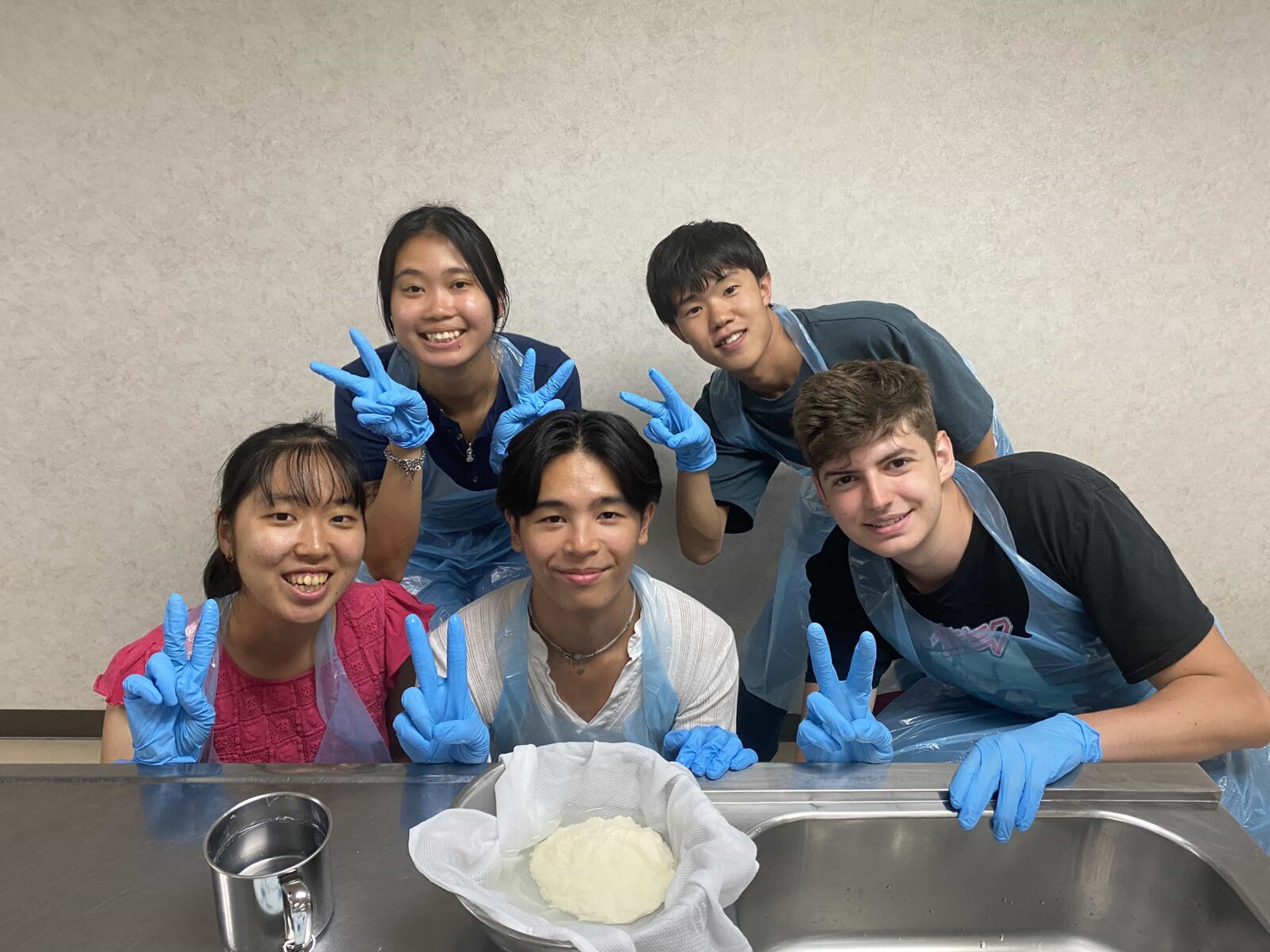
Photo credit: Daigo Aiuchi (Japan)
Want more information?
Dive deeper into how courses and credits work on our programs, or connect with an advisor to find the best fit for your goals.
Last updated: