Major Advising Page: Asian Languages and Cultures
Students declared in the Asian Languages and Cultures (ALC) major and named options in East Asian, South Asian, and Southeast Asian Studies in the Department of Asian Languages and Cultures consider study abroad in many countries across Asia. Studying abroad can be an incredibly enriching experience, and provides you with a unique opportunity to develop or improve language proficiency, gain a deeper understanding of culture in its complexity, and broaden your perspectives on oneself and others.
Although studying abroad is not required for the major, it is highly recommended. You can study abroad at almost any time in your career, but there are some important facts to consider. The information below will help you plan your study abroad experience.
Course considerations
It is critical to know where you stand with your degree requirements before studying abroad. Make sure to review the pre-approved courses (those courses that have been approved by the department for other students) for each program. If you know you have required courses, either for the major or L&S, please consult the ALC undergraduate advisor. Please keep in mind that it can be challenging to find coursework that will meet the requirements for L&S Quantitative Reasoning, Communication, Ethnic Studies, and Natural Science abroad; these requirements are generally best completed at UW.
No matter when you study abroad, you should check in with your academic advisors once you arrive on-site and register for courses. We want to ensure that any changes or additions to course schedules keep you on track to graduate.
Language courses
When you study abroad, you will be given a placement test at your respective university. No matter which level you are placed in, you will receive UW credits for the next level language sequence. So, if you have finished fourth semester language courses at UW, you will receive credit for fifth semester regardless of the level at which you are placed at the university abroad. In order to make the most of your studies, we recommend reviewing in preparation for a placement test. If the placement test will occur at the end of the summer, be sure to practice and use your language as much as possible! It is in your best interest for the course placement to be as accurate as possible.
ALC area studies courses
Most programs will offer you a wide variety of elementary and intermediate Asian Studies elective courses. Keep in mind that advanced-level courses and certain L&S degree requirements can be more difficult to find abroad.
Course credits abroad
Some of the courses offered abroad may be between 1-2 credits. In such cases, you can work with your IAP Enrollment Manager to “bundle” courses together as 3-4 credits. This will allow you to come back with fewer courses that are higher in credit, which can be more easily applied to major and degree requirements.
Map your experience as an
Asian Languages and Cultures student
Current and potential ALC majors should be aware of their major requirements as you are planning a study abroad experience. Be aware that this is only a suggested plan, and there is flexibility in this plan. We work hard to make studying abroad a viable option for all students.
We recommend meeting with the ALC undergraduate advisor in advance to discuss your interest in study abroad and plan courses accordingly. The ALC advisor can meet with students at any stage of the process. Schedule an advising appointment using Starfish. If you are currently studying abroad, email to request a meeting time that is more convenient for your time zone.
Many students study abroad multiple times in their academic career at UW–Madison; what courses you choose earlier in your major – or later in your major – will vary greatly. Students who are double-majoring in another discipline have discovered that fulfilling their Asian Studies electives while abroad is very helpful in completing their additional major.
Freshman year
At this point, most students are just beginning to explore their interest areas and find out where their skills and talents are best utilized. IAP hosts a number of open advising events and information sessions every semester. Attend some of these events to begin exploring options, gathering information, and finding resources.
This is a good time to get a foundation in beginning-level language courses, elementary courses on Asian Studies, and general education and breadth requirements.
Sophomore year
By this point, many students are more comfortable identifying which majors or certificates fit their goals best. They are also developing a better sense of what it means to be fully engaged in a particular area of study. You will want to consider specific locations, length of programs, language of instruction, size of the college or university, academic rigor, course offerings, internship opportunities, and housing options. All of these factors contribute to determining the best fit for your educational expectations. You will also need to spend time with your academic advisors, making certain the programs you are most interested in offer courses that keep you on track for completing your degree in four years.
Second-year students who study abroad should continue with intermediate-level language courses and intermediate courses on Asian Studies. Finding courses to meet humanities, literature, and social science requirements abroad can also be helpful in completing L&S and major requirements.
Junior year
The third year of college is the most popular time to go abroad; however, we want to encourage you to keep your options open. It is especially important that the timeframe and program selected fit the academic goals and plans for you, so you have the best experience possible.
Third-year students who study abroad will continue with courses, intermediate-advanced language courses, and intermediate courses on Asian Studies. Finding courses to meet humanities, literature, and social science requirements abroad can also be helpful in completing L&S and major requirements.
Senior year
The final year of a student’s college career can be an exciting time to go abroad. Most students have a very well-developed sense of themselves, their interest areas, strengths, and future career goals. Electing to go abroad at this point can solidify plans as well as allow for special experiences such as internships that play a part in career exploration. As an intern nearing graduation, students can be appealing candidates to hire. These experiences also lead to opportunities for networking and informational interviews.
If, as an Asian Languages & Cultures major, you are considering studying abroad during your senior year, you must plan to take the advanced capstone course in your junior year, or discuss the option of a directed study with an ALC faculty member and the undergraduate advisor while abroad.
If you will be entering graduate school or starting a position that requires proof of your degree, keep in mind that when you receive your final grades can be greatly impacted by the dates of your spring term abroad. Some programs in Asia will not issue spring transcripts until September. Your degree will show that you graduated in May, but it will not be posted by UW–Madison until after IAP can record your study abroad courses and grades on your UW–Madison transcript. You can request letters from the department or a Conferred Degree Report from the Registrar’s office to give evidence of progress towards your major and degree at UW–Madison.
Ask questions
- What courses must I complete for my degree (breadth/depth, major requirements, etc.)?
- Do I need to be on UW–Madison’s campus for any courses in my major?
- How many electives do I have outside of my major [for LAS credits, IA credits, Degree credits]?
- How will the capstone course fit into my plans?
- Honors in the Major – how will I plan my senior honors thesis or other requirements?
- What courses can I take on my program?
- How and when do I select courses for my program?
- When will I know course equivalents for my program?
- What is the course structure like abroad?
- What happens if the language course I place into feels too easy/too hard? What are my steps to change levels?
- What is the housing situation like: dorm, home-stay, apartment?
- Can I talk to a student who went on this program?
- What skills do careers related to my major require, and how might participating in a particular program help me gain those skills?
- When would be the best time to participate in a program based on my career goals?
- How will participating in a study abroad, study away, or international internship make me stand out?
- Why do I want to study abroad?
- How long do I want to study abroad for – a few weeks, a semester, a year?
- How does studying abroad fit into my academic, personal, and/or professional goals?
- What career skills or proficiencies will I strive to acquire or enhance on my program?
Discover programs that are right for you
The following are programs that may be of interest to you! Durations and courses vary and may count toward electives or degree requirements. If you do not have specific requirements, there’s more flexibility in program type and location.
These opportunities are not an exhaustive list of all programs.
ALC students are encouraged to explore opportunities anywhere that meet their academic and personal goals and interests. Some of these programs are unique offerings, like short-term programs with faculty leaders, exchange opportunities, or intensive language experiences — take a look to see all of your options. We are proud to offer an extensive range of programs in Asia!
In this section
East Asia
China
- Accelerated Chinese Language in Shanghai (semester or summer)
- CIEE China in a Global Context in Shanghai (semester or summer)
- CIEE Shanghai Business, Language, and Culture (semester or summer)
Hong Kong
- Chinese University of Hong Kong (semester or summer)
- City University of Hong Kong
- Hong Kong University of Science & Technology Business (semester or summer)
- Hong Kong University of Science & Technology
- University of Hong Kong
Japan
- CET Japan Summer Study Abroad (summer)
- Keio University
- Kyoto University
- Nanzan University
- Sophia University
- UW Food Systems and the Environment in Northern Japan (summer)
- UW Summer Launch in Japan: Supernatural and Surreal (summer)
- UW Wellbeing and the Art of Forest Bathing in Japan (winter intersession)
- Waseda University
South Korea
Taiwan
- CET Taiwan (semester or summer)
- National Taiwan University
South Asia
Bhutan
SFS Himalayan Studies (semester or summer)
India
- CFHI Global Health Internships in India (summer or spring five-week session)
- UW Global Health Field School in India (winter intersession)
- UW Global Immersion in International Business in India (winter intersession)
- UW Language and the Environment in South Asia (summer)
Nepal
Sri Lanka
UW Global Health Community Health & Asset-Based Community Development in Sri Lanka (winter intersession)
Southeast Asia
Cambodia
SFS Environmental Justice and Mekong Ecologies (semester or summer)
Indonesia
Southeast Asia Flagship Language Initiative Program – Indonesia (fall semester)
Singapore
Thailand
Vietnam
- Southeast Asia Flagship Language Initiative Program – Vietnam (fall semester)
- UW Global Experience in Marketing: Vietnam (winter intersession)
International Internships
International internships allow you to apply your academic skills to the real world and gain valuable professional experience abroad while earning UW–Madison course credit.
As you consider your academic and professional goals for studying abroad, explore the different internship options, including UW Signature internships, internship-focused programs, part-time internships, or applying for credit for an external internship.
Check with your academic advisor to see if earning credit for your internship abroad can fulfill a major or certificate requirement.
Hear from students in your major
Explore student blogs and reflections to see how your peers have connected international experiences to their studies. Discover real stories about the skills, challenges, and professional insights gained through our programs.
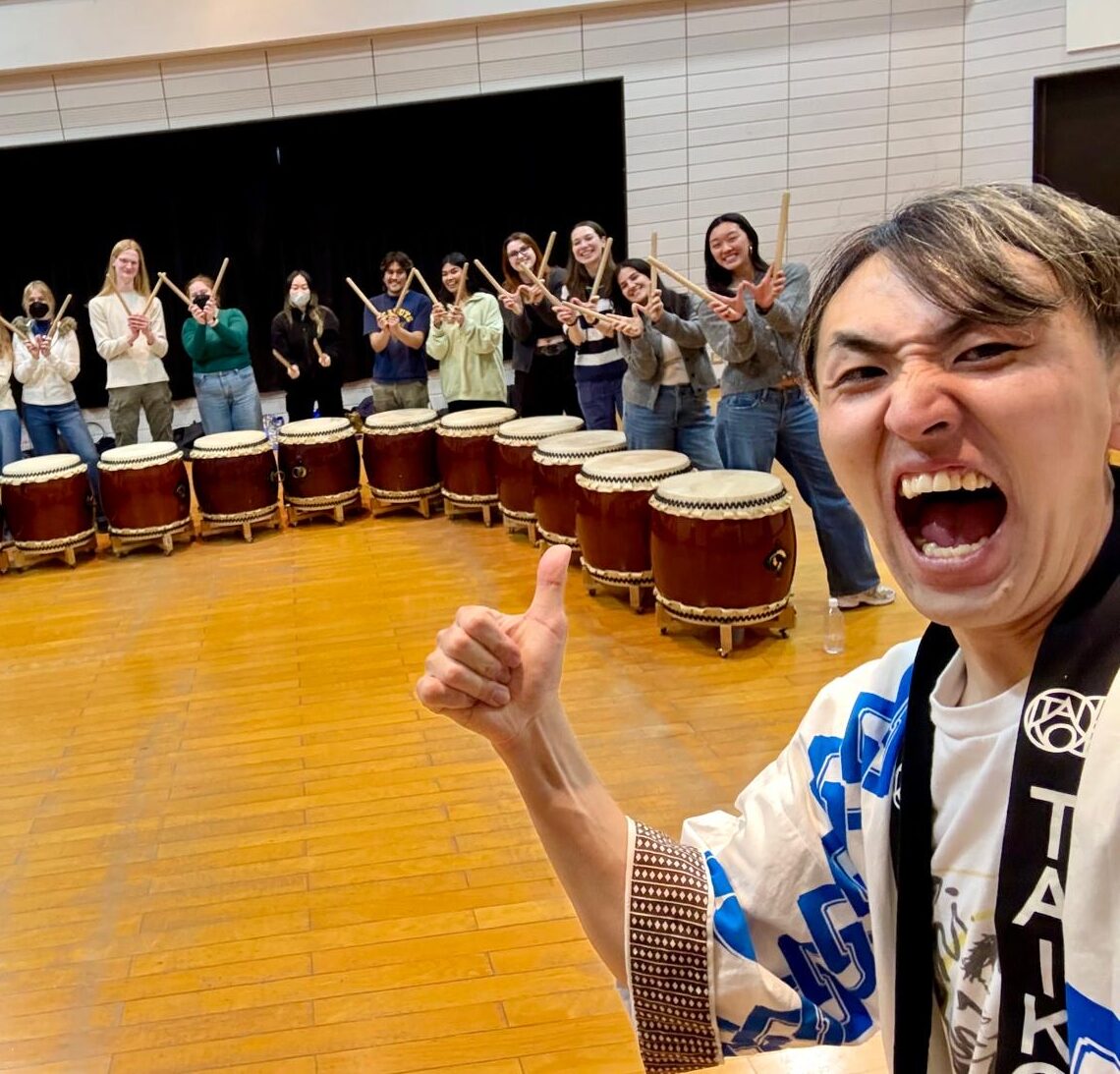
Photo credit: Vivian Tran (Japan)
Want more information?
Dive deeper into how courses and credits work on our programs, or connect with an advisor to find the best fit for your goals.
Last updated: