Major Advising Page: Biology
Can biology students study abroad? Yes, a variety of study abroad programs can fit in with the biology major without delaying graduation. In fact, the biology major consistently ranks in the top ten majors sending students abroad!
Many students use this international opportunity to take unique bioscience courses at other institutions that count for their major, while others use this opportunity to focus on non-science coursework and explore other topics that interest them.
Similar to each individual student’s 4-year plan, there are many ways to study abroad in the biology major. Schedule an appointment with a study abroad advisor and your biology major advisor to get the process started by exploring programs that best fit with your academic plans and personal goals.
Course considerations
Many study abroad programs offer a plethora of excellent upper-level bioscience courses. Students often complete courses abroad that count for the intermediate/advanced biology breadth requirement (categories A-E). Some programs have classes already equated to UW–Madison courses that fulfill this requirement. These equivalencies can be found on each program’s academic page. Programs may not have all courses pre-equated simply because no student has taken them in the past.
How do I know if a course will likely count toward the major?
A good guideline is to look for upper-level bioscience courses that have science prerequisites. Once you have identified courses of interest, work with your study abroad advisor to gather syllabi, if possible. Then, meet with your biology advisor to determine if and how the course will count toward your major or degree requirements. You will work with the study abroad office to complete the approval process.
Map your experience as a
biology student
To study abroad, ensure you are familiar with the biology major requirements and work with your advisor on developing your 4-year plan. Your 4-year plan will provide a sense of how and when studying abroad will best complement your major and degree. A common initial question is whether you want or need to take courses abroad that will count for the major. Answering this question by assessing and establishing your goals and priorities can give you a sense of what programs to explore in depth.
You can study abroad at any point during your time at UW–Madison, but most students choose to study abroad during their junior or senior year. We recommend completing core coursework such as introductory mathematics, chemistry, and biology requirements for the major at UW–Madison. This said, you could always study abroad earlier and complete core coursework after returning. If you are applying to professional health programs (such as medical school or dental school), you are advised to complete the majority of their prerequisite coursework at UW–Madison.
To gain background information about study abroad and the various programs available, attend the Study Abroad Fair on campus, visit the Program Search, read Returned Student Profiles for Biology students, and/or meet with study abroad advisors.
Freshman year
At UW–Madison, focus on a balanced schedule of courses that begin the curricular building blocks for your major. Investigate winter intersession and summer term programs that interest you. Explore potential semester and summer programs for the future.
Sophomore year
At UW–Madison, continue a balanced schedule of classes that build the foundation for your biology major. You may consider going abroad this year on either a semester or a summer program. Meet with your biology advisor to ensure you are on track with core chemistry and biology courses. This can also be a year to narrow down programs for future terms.
Junior year
This is the most popular year to study abroad, as you will have likely completed the majority of your introductory coursework. This will allow you to take advantage of a range of programs that offer unique and interesting upper-level coursework in the biosciences that will count for the biology major.
Senior year
It is not too late! You can study abroad in your senior year without delay in graduation with careful planning with your advisor. All returned students should meet with career services to explore how to best convey the international experience to future employers, to graduate schools, and on personal statements.
Ask questions
- What biology major courses do I have left to complete? Are there specific courses I should plan on taking at UW? When are these typically taught?
- What general education requirements do I need to complete?
- What factors should I consider if I am on a pre-health track and need to plan for exams like the MCAT?
- What programs offer courses I would like to take?
- What programs offer the study abroad experience that best fits my needs?
- When and how do I select courses for my program, and when will I hear about course equivalencies?
- What are the classes like abroad, and how do they differ from UW–Madison courses?
- What is the application and notification timeline for programs and scholarships?
- What skills do careers related to my major require, and how might participating in a particular program help me gain those skills?
- When would be the best time to participate in a program based on my career goals?
- How will participating in a study abroad, study away, or international internship make me stand out?
- Why do I want to study abroad?
- How long do I want to study abroad for – a few weeks, a semester, a year?
- How does studying abroad fit into my academic, personal, and/or professional goals?
- How will studying abroad enhance my academic and global perspectives?
- What career skills or proficiencies will I strive to acquire or enhance on my program?
- How much can I afford to spend?
Discover programs that are right for you
The following are programs that may be of interest to you! Durations and courses vary and may count toward electives or degree requirements. If you do not have specific requirements, there’s more flexibility in program type and location.
These opportunities are not an exhaustive list of all programs.
In this section
Semester and academic year programs
Australia
- University of Queensland (semester)
- James Cook University (semester)
- SFS Rainforest Studies (semester or summer)
Bhutan
SFS Himalayan Studies (semester or summer)
Cambodia
SFS Conservation and Development Studies (semester or summer)
Costa Rica
SFS Ecological Resilience Studies (semester or summer)
Czech Republic
Denmark
DIS – Study Abroad in Scandinavia (semester or summer)
Ecuador
Ceiba Tropical Conservation Semester: Galapagos, Andes and Amazon (spring semester)
Greece
Perrotis College (semester or summer)
Kenya
SFS Endangered Species Conservation (semester or summer)
Netherlands
New Zealand
Massey University
Manawatu/Palmerston North campus only
Panama
SFS Tropical Island Biodiversity & Conservation Studies (semester or summer)
Singapore
National University of Singapore (semester or summer)
South Africa
- CFHI Global Health Internships in South Africa (spring semester or summer)
- University of Cape Town
South Korea
Yonsei University
Fall could be a good fit for many biology majors. Spring students should read the course prerequisites carefully. Formal approval of CERs is by the department granting the CER; biology can review/approve for the major requirements when a student has a complete syllabus
Tanzania
SFS Wildlife Management & Wildlife Research (semester or summer)
Turks and Caicos
SFS Marine Resource Studies (semester or summer)
Short-term programs
Australia
SFS Rainforest Studies (semester or summer)
Bhutan
SFS Himalayan Studies (semester or summer)
Cambodia
SFS Conservation and Development Studies (semester or summer)
Costa Rica
- SFS Ecological Resilience Studies (semester or summer)
- UW Banking Animal Biodiversity in Costa Rica (spring break)
Denmark
- DIS – Study Abroad in Scandinavia (semester or summer)
- UW Cancer Care Across Cultures in Denmark (winter intersession)
Biology majors should select the Zoology 400 equivalent
Greece
Perrotis College (semester or summer)
Ireland
University College Dublin Physics (summer)
Kenya
SFS Endangered Species Conservation (semester or summer)
Panama
SFS Tropical Island Biodiversity & Conservation Studies (semester or summer)
Singapore
National University of Singapore (semester or summer)
South Africa
CFHI Global Health Internships in South Africa (spring semester or summer)
Tanzania
SFS Wildlife Management & Wildlife Research (semester or summer)
Turks and Caicos
SFS Marine Resource Studies (semester or summer)
USA
UW Marine Biology in the Florida Keys (winter intersession)
International Internships
International internships allow you to apply your academic skills to the real world and gain valuable professional experience abroad while earning UW–Madison course credit.
As you consider your academic and professional goals for studying abroad, explore the different internship options, including UW Signature internships, internship-focused programs, part-time internships, or applying for credit for an external internship.
Check with your academic advisor to see if earning credit for your internship abroad can fulfill a major or certificate requirement.
Hear from students in your major
Explore student blogs and reflections to see how your peers have connected international experiences to their studies. Discover real stories about the skills, challenges, and professional insights gained through our programs.
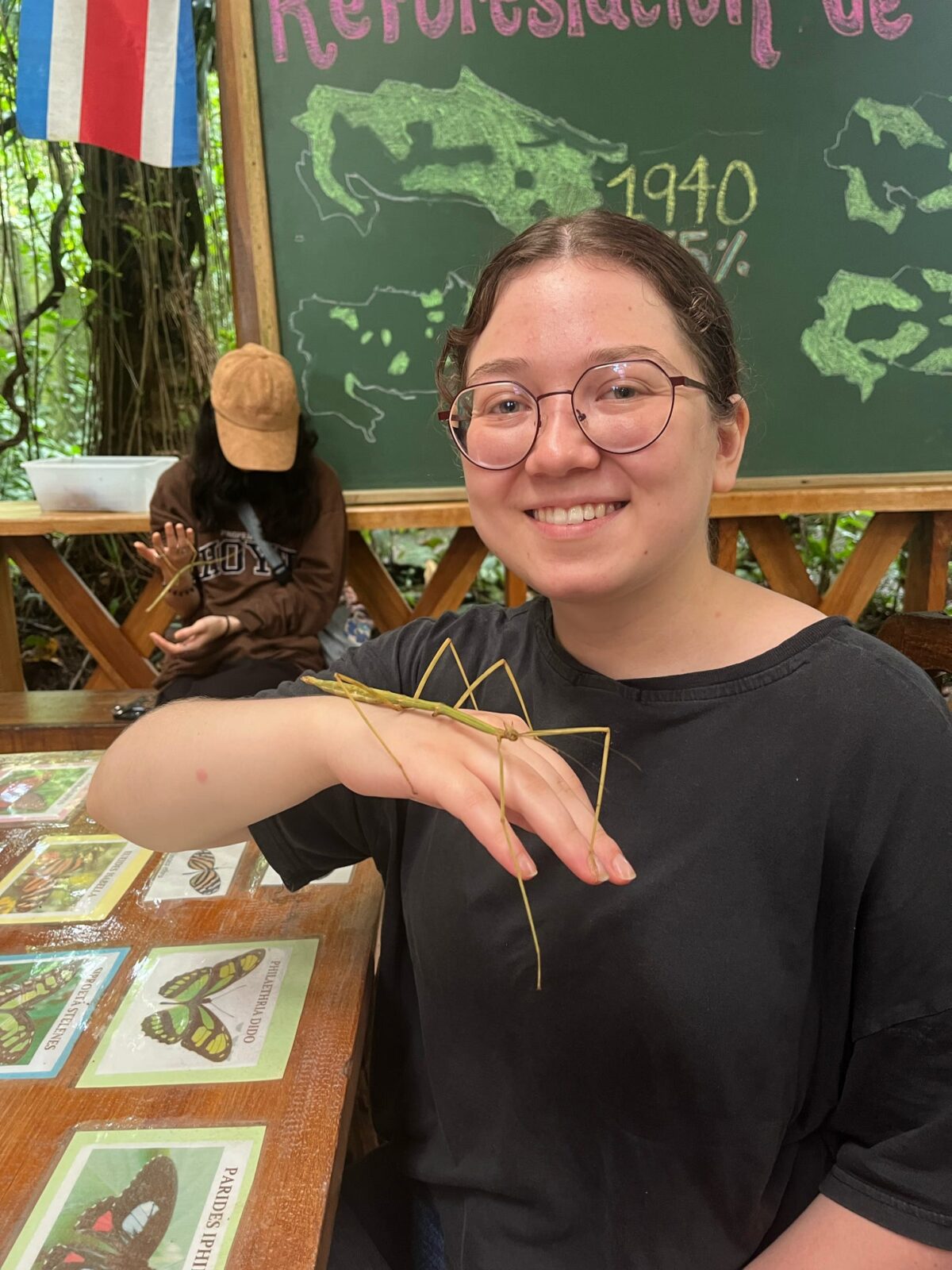
Photo credit: Adria Kriehn (Costa Rica)
Want more information?
Dive deeper into how courses and credits work on our programs, or connect with an advisor to find the best fit for your goals.
Last updated: