Major Advising Page: Educational Policy Studies
The educational policy studies major addresses urgent questions related to education policy and practice both domestically and globally, past and present. Majors will become well-informed leaders who can engage critically, thoughtfully, and ethically in the educational policy debates in Wisconsin, the US, and the world. The program will allow you to study debates concerning education-related social disparities and the pursuit of equal educational opportunities for all.
A comparative perspective and intercultural awareness are crucial to developing the critical perspectives fostered in this major. We therefore encourage you to pursue educational experiences outside of the University of Wisconsin–Madison through study away and study abroad. There are lots of good reasons to do so.
The programs recommended on this advising page were selected in collaboration with International Academic Programs (IAP). These course offerings, volunteer opportunities, and experiential learning activities provide our students with an opportunity to analyze educational inequality and social justice in the US and around the world. All of the programs recommended here include courses that count directly towards the educational policy studies major.
Course considerations
Students who major in educational policy studies must take the three core courses at UW–Madison:
- Ed Pol 300 School and Society,
- Ed Pol 340 Comparative Education,
- and Ed Pol 412 History of American Education.
While you may benefit from taking these courses before you study abroad or away, you are not required to do so.
Other than these core classes, majors take 4 depth classes and 3 breadth classes. While studying abroad or away, you may choose to take:
- up to two of your four depth requirements,
- and up to two of your four breadth requirements
Two additional depth classes must be taken from the offerings in the Department of Educational Policy Studies, and students must take an Education Psychology course at UW–Madison to fulfill their final breadth requirement.
You are encouraged to consult with faculty or the School of Education Academic Services if you wish to take courses whose titles are not listed as breadth or depth requirements but whose content focuses on education studies or educational policy.
Map your experience as an
educational policy studies student
There is no best time to study abroad as an educational policy studies major or certificate candidate. While completing some of your core classes (300, 340, and 412) before you go will give you a foundation in the field and help you compare topics from those classes to what you learn abroad, doing so is not required. If you are also majoring in another discipline, you will ultimately want to determine what works best for both of your degree programs by consulting with your academic advisors as early as possible in your time at UW–Madison.
Each study abroad program has specific requirements or prerequisites for participation, so it is best to consult with IAP early as you select your preferred program and decide when to go.
You may choose to study abroad or study away at any point after the first semester of your first year at UW–Madison. We strongly encourage you to consider studying abroad/studying away in your sophomore or junior year, in particular. Please note that some programs require sophomore or junior standing.
It’s never too early to start planning your study abroad or study away experience. When you have some free time, visit the Study Abroad Resource Center (3rd floor, Red Gym) and mark your calendar for the Study Abroad Fair. Meet with advisors at IAP to learn more about your study abroad program options and contact your academic advisor to see how your time abroad can fit into your academic plan. You could also check out international internships or you might consider the Wisconsin in Washington, DC program.


Ask questions
- What classes must I complete for my degree (breadth/depth, major requirements, etc.)?
- Which of my required courses must be completed on UW–Madison’s campus?
- How many electives may I take outside of my major?
- What classes can I take abroad?
- How and when do I select courses for my program?
- When will I know course equivalents for my program?
- Are there volunteering or community-based learning opportunities in the programs I’ve identified?
- What is the class structure like abroad, including the structure for exams and grading?
- Does the host university have requirements for sophomore or junior standing? In other words, do I need to be sure I’ve already taken certain courses at UW–Madison in order to take the courses that interest me while studying abroad?
- Will I be taking classes with host nationals, other international students, or other US students?
- Does this program have a homestay option for me to get to know the local language and cultural practices better?
- What skills do careers related to my major require, and how might participating in a particular program help me gain those skills?
- When would be the best time to participate in a program based on my career goals?
- How will participating in a study abroad, study away, or international internship make me stand out?
- Why do I want to study abroad?
- How long do I want to study abroad for — a few weeks, a semester, a year?
- How does studying abroad fit into my academic, personal, and/or professional goals?
- What career skills or proficiencies will I strive to acquire or enhance on my program?
Discover programs that are right for you
Although you can consider any study abroad program that interests you, here we identify programs we recommend for a student in the educational policy studies major. We include programs in diverse geographic contexts and with distinct foci within the field of education. If your particular interests are not represented here, we encourage you to check with IAP for other programs.
The following are study abroad programs focused on themes that can be directly related to educational policy studies. These programs may include internships, fieldwork, or directed study opportunities. These opportunities are not an exhaustive list of all programs.
In this section
Semester and academic year programs
Argentina
IFSA Argentina Study Abroad Programs (semester and summer)
Denmark
DIS – Study Abroad in Scandinavia (semester and summer)
England
France
UW in Paris (spring)
Iceland
Japan
Netherlands
United States
UW Wisconsin in Washington DC, Internship Program (semester and summer)
Short-term programs
Argentina
- CIEE Summer Community Public Health (summer)
- IFSA Argentina Study Abroad Programs (semester and summer)
Australia
Belize
Costa Rica
UW Team Building in Costa Rica (summer)
Denmark
DIS – Study Abroad in Scandinavia (semester and summer)
Dominican Republic
Ecuador
England
UW Theatre in London (summer)
Greece
UW Dancing Cultures in Greece (summer)
Ireland
New Zealand
UW Crossroads of Culture and Health in New Zealand (winter intersession)
Portugal
- UW City as Studio: Drawing in Portugal (summer)
- UW Movement as Medicine in Portugal (summer)
Thailand
UW Hmong Studies in Thailand (summer)
United States
UW Wisconsin in Washington DC, Internship Program (semester and summer)
International Internships
International internships allow you to apply your academic skills to the real world and gain valuable professional experience abroad while earning UW–Madison course credit.
As you consider your academic and professional goals for studying abroad, explore the different internship options, including UW Signature internships, internship-focused programs, part-time internships, or applying for credit for an external internship.
Check with your academic advisor to see if earning credit for your internship abroad can fulfill a major or certificate requirement.
Hear from students in your major
Explore student blogs and reflections to see how your peers have connected international experiences to their studies. Discover real stories about the skills, challenges, and professional insights gained through our programs.
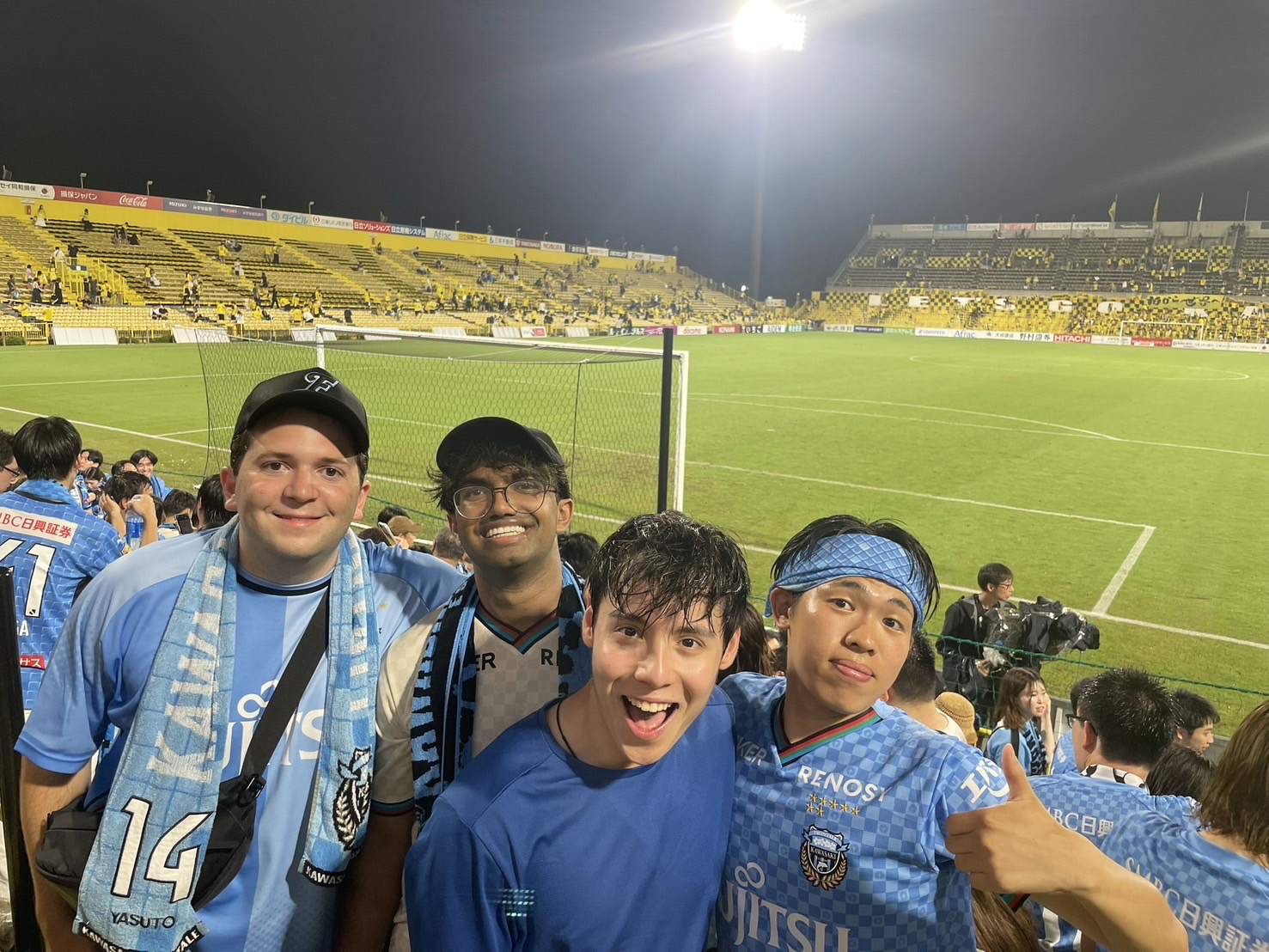
Photo credit: Rohit Bakayat (Japan)
Want more information?
Dive deeper into how courses and credits work on our programs, or connect with an advisor to find the best fit for your goals.
Last updated: