Major Advising Page: Sociology
The Department of Sociology strongly encourages our majors to consider studying abroad! There are few better ways to hone and apply your sociological imagination than by stepping outside your comfort zone and immersing yourself in an unfamiliar place and culture. The study abroad experience provides a chance to challenge yourself and enhance your work in the major with the global perspective that comes with experiencing another culture firsthand.
When sociology majors study abroad, they:
- develop a comparative perspective on the issues sociology explores, such as demography, the organization of institutions like schools, criminal justice systems, political bodies, and religions, and various axes of social inequality
- learn to navigate novel situations, improve their ability to listen, learn, and see the world from other perspectives
- increase their ability to contextualize what they take for granted as “normal” in a global context
- complement their on-campus study with the perspectives of faculty abroad
- meet and exchange ideas with students from around the world who are motivated by the same issues and questions they are
Course considerations
Because the sociology major is quite flexible, you have many study abroad options open to you, and you can integrate a study abroad experience into your undergrad career at almost any time.
Map your experience as a
sociology student
Freshman year
During the first year, many sociology majors take general education and breadth credit courses. This is actually a great time to study abroad, though it is also understandable that many students want to use this year to integrate themselves into campus life.
Sophomore and junior years
During these two years, most students complete the four foundational courses in sociology: an Intro to Sociology course, Sociological Research Methods, an Intro to Statistics course, and Classical Sociological Theory. We recommend taking most of these courses on campus, particularly the methods course. (And do you really want to spend your study abroad experience taking statistics?) However, we offer these courses every semester during the academic year, and all but Classical Theory are offered every summer, which allows you plenty of opportunity to complete them, no matter the timing or duration of your study abroad experience.
Junior and senior years
Beyond the four foundational courses in the major, sociology majors complete at least four distribution courses from at least two of the seven distribution groups listed in the Guide. The great news for students considering study abroad is that many intermediate and advanced courses offered abroad can be approved for distribution credit, even if they are not precise matches for courses offered at UW–Madison. For example, a course on the juvenile justice system of France (or wherever you might be studying) might not be a direct equivalent for UW–Madison’s U.S.-focused juvenile delinquency course. However, it would certainly count toward credit in the Deviant Behavior & Criminology distribution group. Your transcript would say “Sociology 463: Study Abroad- Deviant Behavior.”


Ask questions
- What classes must I complete for my degree (breadth/depth, major requirements, etc.)?
- Do I need to be on UW–Madison’s campus for any courses in my major?
- How many electives do I have outside of my major?
- What classes can I take abroad?
- How and when do I select courses for my program?
- When will I know course equivalents for my program?
- What is the class structure like abroad?
- What skills do careers related to my major require, and how might participating in a particular program help me gain those skills?
- When would be the best time to participate in a program based on my career goals?
- How will participating in a study abroad, study away, or international internship make me stand out?
- Why do I want to study abroad?
- How long do I want to study abroad for — a few weeks, a semester, a year?
- How does studying abroad fit into my academic, personal, and/or professional goals?
- What career skills or proficiencies will I strive to acquire or enhance on my program?
Discover programs that are right for you
The following are programs that may be of interest to you! Durations and courses vary and may count toward electives or degree requirements. If you do not have specific requirements, there’s more flexibility in program type and location.
These opportunities are not an exhaustive list of all programs.
In this section
Semester and academic year programs
Argentina
Czech Republic
CIEE Central European Studies in Prague (semester and summer)
Denmark
- DIS – Study Abroad in Scandinavia (semester and summer)
- University of Copenhagen
England
- Lancaster University
- London School of Economics (year and summer)
- University of Leeds
- University of Westminster (semester and summer)
- UW in London (spring)
France
Germany
Hong Kong
Ireland
IFSA University of Galway (semester and summer)
Italy
CIEE Rome Open Campus (semester and summer)
Netherlands
New Zealand
Singapore
South Korea
Spain
- CIEE Advanced Liberal Arts & Liberal Arts in Seville
- IES Barcelona (semester and summer)
Sweden
DIS – Study Abroad in Scandinavia (semester and summer)
Switzerland
SIT Global Health and Development Policy (semester and summer)
Türkiye
United States
UW Wisconsin in Washington, DC Internship Program (semester and summer)
Wales
Short-term programs
Czech Republic
CIEE Central European Studies in Prague (semester and summer)
Denmark
DIS – Study Abroad in Scandinavia (semester and summer)
England
- London School of Economics (year and summer)
- University of Westminster (semester and summer)
France
Ireland
IFSA University of Galway (semester and summer)
Italy
CIEE Rome Open Campus (semester and summer)
Multiple
Spain
IES Barcelona (semester and summer)
Sweden
DIS – Study Abroad in Scandinavia (semester and summer)
Switzerland
SIT Global Health and Development Policy (semester and summer)
United States
UW Wisconsin in Washington, DC Internship Program (semester and summer)
International Internships
International internships allow you to apply your academic skills to the real world and gain valuable professional experience abroad while earning UW–Madison course credit.
As you consider your academic and professional goals for studying abroad, explore the different internship options, including UW Signature internships, internship-focused programs, part-time internships, or applying for credit for an external internship.
Check with your academic advisor to see if earning credit for your internship abroad can fulfill a major or certificate requirement.
Hear from students in your major
Explore student blogs and reflections to see how your peers have connected international experiences to their studies. Discover real stories about the skills, challenges, and professional insights gained through our programs.
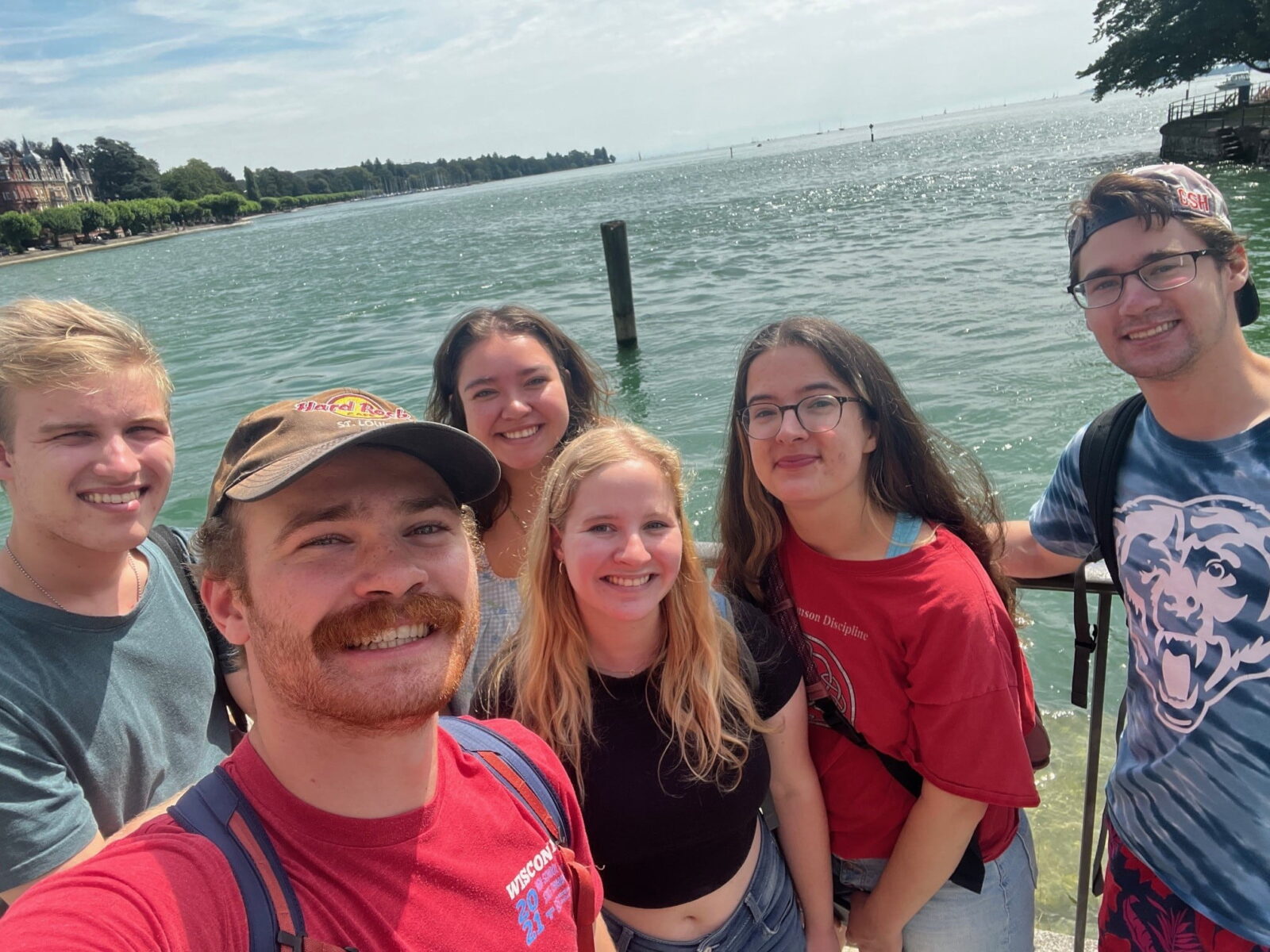
Photo credit: Isabella Richter (Germany)
Want more information?
Dive deeper into how courses and credits work on our programs, or connect with an advisor to find the best fit for your goals.
Last updated: